
Several tours on this site are hosted by Sámi families. The table lists the ones whose offer names a Sámi guide, herder or family.



Who the Sámi are
The Sámi Parliament of Finland calls the Sámi the only recognised Indigenous people in the European Union. The Finnish government portal finland.fi adds that their homeland, Sápmi, is split between Finland, Sweden, Norway and Russia, and that three Sámi languages are spoken in Finland: Inari Sámi, Northern Sámi and Skolt Sámi. The word siida means a home village or community in Northern Sámi. The Siida museum in Inari opened in 1998. It grew out of the Sámi Museum, founded in 1963 as the first independent Sámi museum in the Nordic countries. See Inari and Ivalo for tours near the museum.
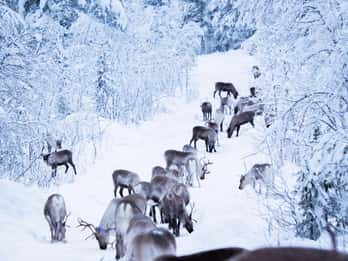
Herding as a way of life
finland.fi describes the Sámi as a culture based on reindeer. It says the Sámi languages hold a large vocabulary around reindeer husbandry, that the Sámi traditionally divide the year into eight seasons and that events such as the winter round-up bring families and communities together. The Reindeer Herders Association of Finland dates the herding year from 1 June and puts the round-ups between late September and midwinter. Calves are earmarked in June and July, and in winter the herders work by snowmobile, with dogs or by other means.
Who may own reindeer
The Norwegian government writes that the Sámi population has a confirmed historic right to reindeer husbandry in Norway. The Sámi reindeer herding area covers about 40 % of the land. Just over 3,000 people work in Sámi reindeer husbandry, and the herds add up to about 250,000 animals, more than 185,000 of them in Finnmark. Owners herd together in groups called siida, or sitje in South Sámi. The government counts about 100 summer siidas and about 150 winter siidas in recent years, and the Sámi pastures are divided into six regions and 82 districts.
Finland has a different rule. The Reindeer Herders Association lists who may own reindeer there: citizens of the European Economic Area who live permanently in the husbandry area, the herding cooperatives and the association itself. Sámi origin is not a condition on that list. The nature service Metsähallitus names Inari, Utsjoki, Enontekiö and the north of Sodankylä as the Sámi homeland, where herding matters most. A farm near Rovaniemi lies outside those municipalities and is therefore not Sámi by default. The listing has to say it. The International Centre for Reindeer Husbandry counts about 5,000 members of the Finnish herding cooperatives, about 1,000 of them Sámi. The figures date from the early 2000s, and the association publishes no newer split by origin.
What the listings say about the hosts
Tromsø Arctic Reindeer sends a Sámi guide, and its sledding tour has a joik performed by the guide in a lavvu. Reindeer Experience Tromsø lists storytelling by Sámi people at a Sámi camp and keeps groups to no more than 45. Tromsø Lapland names an authentic Sámi guide, and Wondering Reindeer says a Sámi reindeer herder guides the whole tour in a group of at most 22. All of these start from Tromsø.
Near Rovaniemi, Arctic GM Experiences writes that a family with Sámi heritage hosts the safari, with at most 8 guests. In Kiruna, Go to Lapland sends you to a Sámi reindeer herder for a lavvu dinner, and Giron Reindeer lists authentic Sámi people at a farm in the village of Rávttas, 20 km north-west of Kiruna.
Words you meet on the tour
The listings call the Sámi tent a lavvu or lávvu and a hut a gamme. A joik is a traditional Sámi song. Bidos is a stew served at confirmations, weddings and other festive occasions, according to the Wondering Reindeer listing, and the Tromsø Arctic Reindeer listing calls it a reindeer stew. The Tromsø tours offer a vegetarian or vegan option, and the Kiruna lunch of Giron Reindeer with reindeer meat has vegetarian alternatives on request. Tell the operator about your diet in advance, as one listing asks for 48 hours.
What the Sámi Parliament asks of visitors and operators
The Sámi Parliament of Finland adopted principles for responsible and ethically sustainable Sámi tourism on 24 September 2018. They separate tourism run from within the Sámi community from tourism in which outsiders use Sámi elements without a real connection to it. The principles ask visitors to see themselves as guests in areas with many customs. They say reindeer herding is one of the cornerstones of Sámi culture, and that the Sámi dress is bound to unwritten norms: under Sámi customary law the right to wear it depends on Sámi origin.
The same principles call touristic dog sledding a particularly damaging and culturally unsustainable borrowed tradition, because in some areas it conflicts with reindeer herding. If you plan to combine both animals, read reindeer sleigh ride or husky safari first.
Where to go for it
Tromsø has the most listings that name Sámi hosts. Kiruna has smaller herding families, and Inari is the place for the museum. The guide on animal welfare covers the questions to ask about the animals.
Questions about Sámi culture on reindeer tours
Are reindeer tours run by Sámi?
Some are. The listings of Tromsø Arctic Reindeer, Tromsø Lapland and Wondering Reindeer name a Sámi guide or herder, and Arctic GM Experiences names a family with Sámi heritage. In Finland the ownership rule does not mention Sámi origin, so a farm is not Sámi by default.
What is a lavvu?
The listings call it a Sámi tent. A gamme is a Sámi hut. Several tours serve a meal and tell stories inside one.
What is a joik?
A traditional Sámi song. The Tromsø Arctic Reindeer listing has the guide perform one, and the Wondering Reindeer listing has it sung by Sámi hosts around a fire.
Do the tours serve reindeer meat?
On several tours. The Tromsø Arctic Reindeer dinner lists bidos as a reindeer stew, and the Giron Reindeer lunch in Kiruna has reindeer meat. Vegetarian options exist and need a note in advance.
How many Sámi languages are spoken in Finland?
Three: Inari Sámi, Northern Sámi and Skolt Sámi, according to finland.fi.
Sources for this page
Tour details come from the listings on the booking sites. Everything else is from the pages below.
- Sámi Parliament of Finland: Ethical Guidelines for Sámi Tourism
- Sámi Parliament of Finland: responsible and ethically sustainable Sámi tourism (costume)
- Sámi Parliament of Finland: about us
- finland.fi: Siida shows a Sámi view of how nature and culture go together
- Norwegian government: reindeer husbandry
- Reindeer Herders Association of Finland: reindeer herding cooperatives
- Reindeer Herders Association of Finland: Reindeer 2020 (who may own reindeer)
- Metsähallitus (luontoon.fi): what and where is the reindeer husbandry area
- International Centre for Reindeer Husbandry: Sámi and Finns in Finland